
#72// some good books this year
mid-year check in

Dear Reader,
It’s been a while. But I’ve been reading a lot! So let’s get straight into book talk.
Read
Whistler by Ann Patchett takes the medal for the best book I read in 2026. I wrote “If you have time to read just one book in 2026, let it be Whistler” and I still stand by it. It is difficult to describe a book that is as moving and tender as Whistler. The impact of every small incident in the novel, including the horse (on the cover art) which makes an appearance in four to five pages only, is phenomenal. In the end all our big moments are a collection of smaller memories.
In Whistler, a woman in fifties reconnects with her stepfather (her favorite father figure though her mother’s marriage to the man was brief and abrupt) in a chance encounter. It is a beautiful story, mostly set in New York, about looking back, sharing memories that were perhaps never shared with the closest people in life, revisiting mistakes with no regret or shame, being vulnerable, and unburdening oneself from what were perhaps false memories. It is about experiencing the joy of living a life witnessed by others, and continuing to be immortal in their memories. That’s not all of it; you will have to read the rest. The audiobook narrated by the author is simply splendid. (I have been getting many messages about where to start with Patchett, and I think my favorite book would be The Dutch House—I read this book and cried).

The Correspondent by Virginia Evans has been one of the buzziest books of the year, with raving reviews by readers worldwide. I gave it a go to see what the hype is about, and absolutely loved it! But not in the usual way you love a book. I did not get along with the protagonist, the elderly Sybil Van Antwerp, at all. I found her unlikeable, selfish, boundary-crossing, intrusive and all the things I roll my eyes at. I did not warm up to her over the read either. But the way I cried when the book ended!—that says it all. I was able to see her as a human, devoid of the tags of a wife, mother, adopted child, career woman, sibling, friend, old lady etc.
The Correspondent is a flashback of a life lived; a life of mistakes, regrets, kindness and flaws. Since it is told through letters, we might miss parts of the whole story, but we are told everything that need to be told. There were times I got so worked up over some of Sybil’s ways (very typical of people from an older generation), but then those actions worked out well, so it made me wonder whether people of my generation have put up too many walls and whether we are waiting for someone to reach out. In the novel, we see Sybil’s own trauma, the way it manifested, and the ways she might’ve made amends (and mistakes). I loved (or not loved) that when I was being judgmental about Sybil, she would point a mirror towards me to reflect on my own life and quickly realize I do not want to go down that path. My secrets are safe from judgy readers and perhaps buried deep enough for my own good. I love that at the end of the book you simply want everyone to live a happy life, be kind, and forgive themselves. The Correspondent won the Women’s Prize for Fiction in 2026.
Transcription by Ben Lerner was my constant morning companion this week. Few pages in, I spoke out loud ‘this man can write!’ because this level of sentence writing in a modern book is rare and also very well done. I warn you this (almost dream-like in parts) could be a hit or miss, but for me it was an absolute hit. The short novel follows a man trying to interview his former professor at Brown University, but his phone gets damaged because of which he cannot record the interaction. I see a pattern of memory around the books I am recommending today, and this too walks on similar themes.
Transcription makes us question the fallibility of memory, the ownership over a story/memory, adults experiencing fatherhood in different ways and also how they do things similarly or differently when being in those shoes, and the frail thing called family. I loved how it makes us wonder about technology—does it bring us together or diminish the connection? Do we need documentation and where do we draw the line on documenting vulnerabilities? What is forgiveness? How do we express something differently on a digital device and when we are physically with someone? This would speak volumes to those who love novels set in New England (a large part is set in Providence, Rhode Island), but at the same time it is a novel set in Covid times (without ending up as a Covid-novel), and a novel set around technology (without ending up as a tech novel). Perhaps it is a novel about humans. Lerner’s ability to craft thought provoking sentences that are a delight to read, deserves applause.
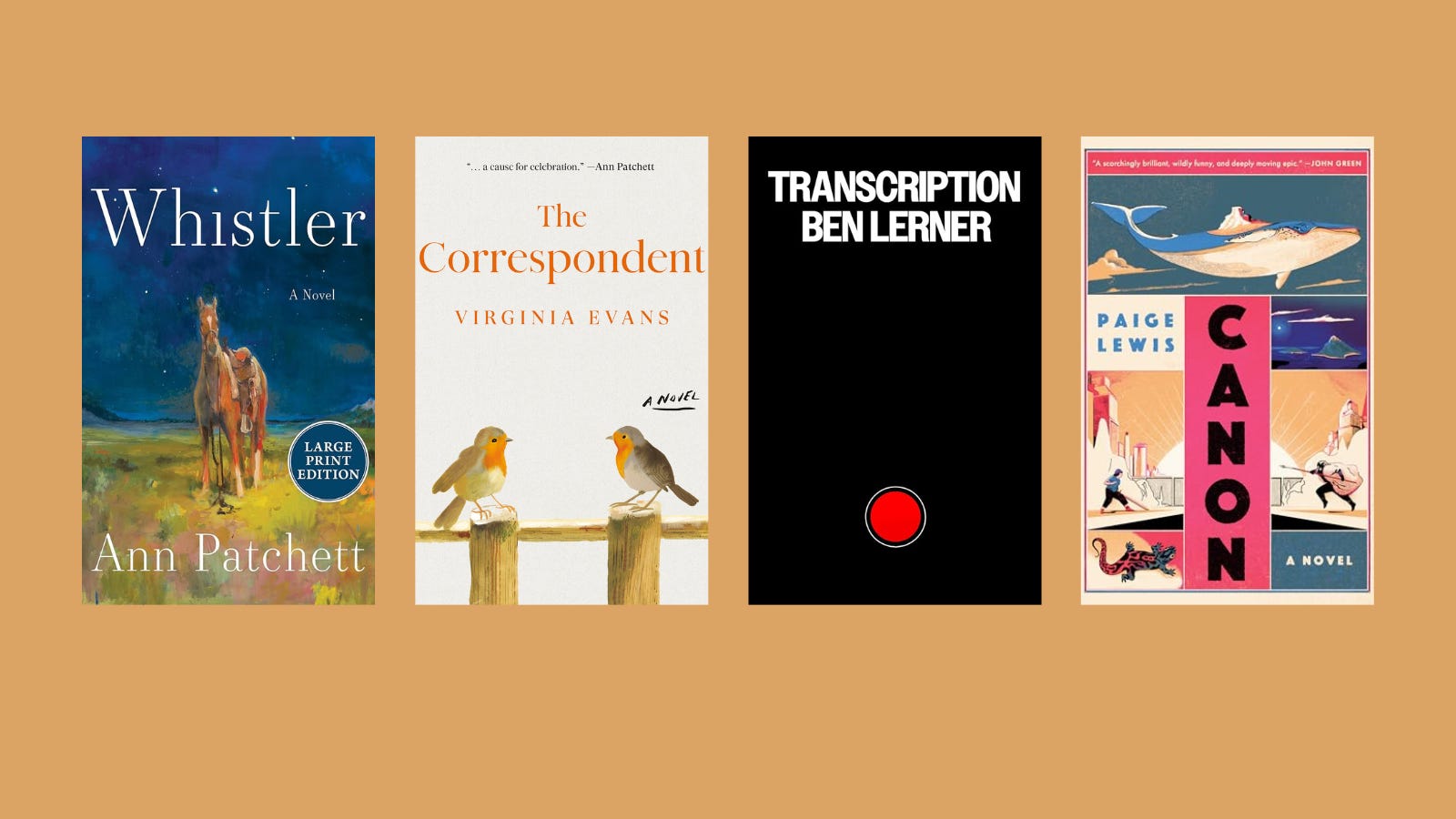
All of today’s recommendations have been more literary in nature. So here’s a last one that diverts from that. ‘Wickedly funny’ might be an apt descriptor for this novel and you will enjoy it if you have a flexible sense of humor. Canon by Paige Lewis is a unique, fresh, experimental novel told in short chapters. In Canon, God has chosen an 18-year-old non-binary person Yara (who loves doing embroidery) to slay the leader of the bad guys. The queer prophet Adrena is aghast that she was not chosen for this mission. This book throws surprises at you, be it a scene with God judging a men’s bodybuilding competition or a chapter titled “honestly we should all be wary of skin care consultants”. The lesser you know about the book, the better. Longer review on Goodreads.
Amazing links
10 uses for a pocket book to keep you off your phone
Design a life you are disgustingly obsessed with
Also Read: Anticipated books of 2026

That’s all for today. I hope your summer/monsoon reading introduces you some lovely books. If you find one that you love, write to me, so I can check out your favorites too.
Until next time,
Resh x
Loved Whistler and The Correspondent. So I will give the other two a go, especially Canon!
Have missed your newsletter!